Thursday, 22 March 2012


Angela Dorothea Merkel is the first female chanclellor of Germany. She studied in physical chemistry but that is not the career she chose to follow. She entered politics during the revolution of 1989 where she was briefely surving as the deputy spokesperson for Lothar De Maiziere. Later on in 1990 she was elected to represent the state of Mecklengbur-Borpommern. Over several years she as served as a Federal minister for Women and youth, as a federal minister for the enviromment, the Nature conservation and nuclear safety. She was also the secretary of the CDU , was elected at a chairperson in 2000. Angela Dorthea is a great role model from women and she has certainly proved that women can do just as well in politics as men. 


Monday, 19 March 2012

Byzantine Art: Mosaic

For my mosaic I made a white dove. The white dove often carrying an olive branch is a very famous symobol still today in the Christian Church. The white dove is used as a peace symbol in Christianity, Islam, and Judaism.
The dove was used in a Christian story about a great flood over the entire world, in which Noah had to build a huge ark and bring with him a male and female of every kind of animal and wait for a sign of the flood to be over. Each day Noah sends out a white dove to search for land and one day it comes back carrying an olive branch (also another peace symbol.) This dove bringing back the olive branch not only showed that the world was free of the flood but it was ready to welcome back man kind.
Building a huge mosaic in a church 1500 years ago is something I can hardley imagine. Building something that in centuries to come people would look at, admire, and interprit (if the mosaic survived). I think it would also be a very spiritual feeling being the creater of something so holy on such hold ground. Also having such skill as to build a giant mosaic without the electrical and bennificial equitment we have today would take such skill, presition and time. I think its a mirical that the Higha Sofia was only built in only 5 years 10 moths and 4 days. 


Thursday, 23 February 2012

Orthodox Saint and Empress: Theodora I

Theodora I was empress of the Byzantine Empire from 527 - 548. She was a strong feminest and also a great side ruler to Justinian. Theodora died of cancer at age 48 shortly followed by Justinians death. Theodora I became a sait of the Eastern Orthodox Church to be commemorated on November 14. She had a seperate religion from her husband, Justinian, she was a Monophysite and Justinian was a Calcadonian. Theodora was a great coepress of the Byzantine empire and at many times it was her ruling that saved it.

Thursday, 2 February 2012

The Fall of Rome

Why did Rome Fall? I think that there were several reasons combined that began the fall of the Roman Empire. Starting with Geography. One of the main reasons Rome found it so hard to defend themselves one the empire began is due to the way the empire was built. Most invaders were coming from the western boarders which was the weaker side of Romes defenses. Also defending this side of Rome drew soldiers away from other areas. Secondly while all of this was going on there was an economic and work decline. Due to the growth of Romes government and military Rome was importing many luxurious trading items from areas outside of the empire. However dude to the rise of taxes and prices with the decrease in wages the economy couldn't afford to supports these arrangements. Also due to the inflation of pricing and taxes Romans were not earning enough to live by thus there was a high death rate and decrease in number of slaves thus lowering the amount of work. This is when the current emperor, Diocletian demanded a new law be put to use, every Roman citizen had to work, including children.  
I think the most influential reason for the fall of Rome was the economic decline because many of the smaller reasons such as loss of jobs and death toll increase were due to the economic decline or crisis.

Tuesday, 31 January 2012

Jesus Christ Superstar Movie Review

Jesus Christ Superstar, you either love it….or hate it. Enjoy biblical rock operas with a modern twist? Well, this is the movie for you! If not, then I think that you are definitely not going to enjoy this movie. Half a story, ‘interesting’ songs, and modern inscriptions I introduce you to ‘Jesus Christ Super Star.
Jesus Christ Superstar, is the first part of the story that leads up to the crucifixion of Christ. Turned into a rock opera by Andrew Lloyd Webber and directed by Tim Rice is a pain staking movie about the last three years of Jesus’s life up until his crucifixion. Staring Ted Neeley as Jesus Christ, Carl Anderson as Judas, Yvonne Elliman as Mary Magdalene. I present to you, a Rock Opera story with actors in 70’s clothing as well as all they’re singing and performing done in 70’s disco style. With catchy yet repetitive songs as well as some not so gifted singers.
So what really happens in the movie? ‘Jesus Christ Superstar’ starts off with Jesus and his followers in a cave hiding just outside of Jerusalem. They are asking him “what’s the buzz, tell me what’s happening”, or what’s their plan of action? Then throughout the movie we have Judah ‘battling’ with his thoughts about whether Jesus is the long awaited messiah. But as the story goes Judah decides he isn’t and begins to think that Jesus has taken it a little too far. You can see Mary Magdalene coming to sorts with her feeling for Jesus when she sings her song rather dramatically (and sounding a bit droning) “I don’t know how to love him.” While all of this is happening, the Leaders of the Jewish church are beginning to think that the man they call Hosanna isn’t going to just blow over if they leave him be. Soon they mark him a criminal and a liar and they want him dead. So eventually Judas comes to an end with his debate and turns Jesus in to the leaders. This is when the last supper comes into the movie. God tells them how Peter with deny him 3 times, and how Judas has already betrayed him. Eventually captured and whipped Jesus is standing in front of Caiaphas, but Caiaphas doesn’t want this in his hands so he sends him to Pilot, who as well wants nothing with him then he is sent back to Caiaphas who eventually leaves it up to the people.
I think that the last supper is probably the most important scene in the movie because it is fine singing, the acting makes sense for the time period and it properly fits the story. I also liked how they posed in the positions of the painting ‘The Last Supper’.
Why didn’t I like this movie? Well let’s start with the songs, “what’s the buzz”, “I don’t know how to love him”, “Hosanna”, “Jesus Christ Superstar” and “Jesus must die”, are the main songs throughout the movie. Though catchy, some of the songs are too repetitive. “What’s the buzz” this specific songs recurs multiple times during the movie and it rather annoying once you’ve heard it the first time. Also, Mary Magdeline in her solo has a very droning voice. Second, there is a visual suicide, whipping of a person, and prostitutes dancing, how is this a G rated movie? Then as I have mentioned several times before, not the full story. And lastly, though I can see how they were trying to relate the machine guns to the war in Iraq, I don’t think that it worked at all. 
Andrew Lloyd Webber and Tim Rice, usually two very successful directors, have composed a horrible telling of Jesus’s ‘last’ 3 years. But not ending with the Resurrection. I think that they should be telling you the full story. However the Christian religion isn’t about interpreting whether Jesus was raised from the dead or not. Nor is it about whether he was who he said he was, you need to tell the full story from crucifixion to resurrection. I would recommend this movie to those who have bad taste in movies or to those who enjoy religious rock opera’s with a pinch of modernism. If you are not one of these people, I definetly would not recommend Jesus Christ Superstar as a movie for you to enjoyably watching in your excess time. 

Sunday, 27 November 2011

Julius Caesar and Augustus Caesar

 Augustus Caesar: "I found Rome of clay; I leave it to you of marble." These were the words that Augustus Caesar muttered on his deathbed. Historians have several idea to what he was referring to when he said this. Was it the richness and how powerful he had made the Roman Empire? Or was he referring to the way that he had added to Rome's great, famous, and powerful architecture?  For after all many of Rome's famous and great architecture (some of which is still standing today) was built under the reign of Augustus. Such as, the Ara Pacis (alter of peace), the triple arch of Augustus, temples (one dedicated to Julius Caesar after he was declared a god by the senate), and lastly Romes aqueducts. Of course almost all of Augustus's building projects had a deeper meaning take for example, The Ara Pacis shows peace and prosperity. The 3 arches represent that his military strengths are three times as great as those before. And lastly the temple honoring Caesar showed his families ruling among divine right! 

 
Augustus Caesar

Julius Caesar: Julius Caesar was always greatly admired by the people. He was well known for his great military leadership and strategy. He gave many jobs to aid the poor as well as ending the rule of corrupt leaders in the senate. For this reason he however lost the trust and liking from the senate! He also expanded the amount of citizens in Rome by lowering the rules for being declared citizenship. He also gave government positions from some people from lands that he had conquored Caesar was indeed a  great reformer. 

Tuesday, 22 November 2011

Julius Caeser Reformer or Dictator?

Throughout his life, Julius Caesar was liked and admired by many, as well as loathed and feared by others.  Many thought that he didn't act in Rome's best interest, he was to self absorbed and eager for fame.
I personally think that  Caesar was a reformer. He ended the corrupt nature among the leaders in the senate by replacing them with trused others. He restored the cities destroyed by the republic. As well as, strengthen and expanded Rome's empire. He also did not treat defeated enimies with as much cruelty as some.
I think that maybe Caesar did want power but, he went about it in a good way  and not just for him.

Wednesday, 16 November 2011

The Geography and Climate of the Italian penensula

Explain in detail how the geography and climate of the Italian peninsula affected the development of ancient Rome. 

Rome grew and was built into a great city by its victories over apposing tribes. It spread from South to East. Rome also pushed toward the Alps in the North. The geography of where Rome is set it great because of how close it is to the sea, but also towards the center of the Italian peninsula, both these actions provided great trading opportunities also it faces towards the alps giving it good protection against attacks.  After being taken over by Carthage Rome began to build strong sea forces and soon controlled most of the Mediterranean area by them. Also Rome was on an area that used to be volcanic meaning that rocks for building were easy to come by. 


Tuesday, 15 November 2011

The Founding Of Rome

Describe the two legends that have to do with the founding of Rome. Then describe how and when Rome was actually founded. 

Romulus and Remus:
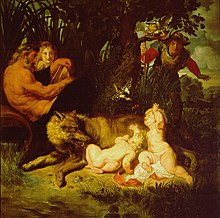
Two brothers were abandoned by the King, they were  placed in a basket and sent down the river to be discovered by a shepherded and his wife. The shepherded soon told the twins of their orgins so the brothers set out during 753 B.C.E to build a city. The two did well together until they began fighting. In the end Romulus attacked Remus and killed him. 

Aeneas: 
The legend of Aeneas was is a much older tale, that was more popular around the time of Ancient Rome, as Romulus and Remus is more popular today. Aeneas was said to be a Hero who was the son of Venus. During this time Aeneas was fighting in the Trojan war, he escaped to Rome where he married the kings daughter, and expanded and built the empire Rome.  

True Story of the Founding of Rome: 
 At around 1000 B.C.E the Latins began settling in the area where Rome was yet to be. They didn't start building their great civilization right away though, it was merly a settlement where pigs and cows were hearded, just a simple area of settlement. Soon different tribes began invading after all the area was a perfect place it way a few miles from the sea as well as in the central area of the Italian peninsula meaning there was great trade routes, it was guarded by the Alps and sea giving little room for invasion you could say...the location was perfect. So they joined together and began defending themselves against invaders and soon a simple place for livestock, and herding was turned into the great city of Rome!!


Wednesday, 26 October 2011

Alexander the Great!

    Alexander the Great was in my mind a powerful, and truly great military leader. He had been taught about cultural elements from his professor Aristotle, who his father had hired. Though Alexander got his pining for power and need for it from his mother Olympia. He got courage, strength and skill in battle from his father.
Even though Alexander only ruled for 13 years (until he was 33) he still managed to accomplish a ton in those few years. As a start Alexander  began by turning Macedonia into a great military power when it started out to be a large city-state with little power.
At age 20 Alexander started ruling after his fathers murder in 336 B.C. Like I said he had great ditermination for building up his power, he murdered anyone who apposed him at the beginning of his rule including his baby step brother! Nearly all of the lands that Alexander conquered her named Alexandria, talk about being full of yourself.
Like i said before he was taught the importance of culture from a young age, Alexander the Great kept some of the peoples religious routines and language so that the people didn't feel the need to rebel. At one point Alexander the Great dressed in Persian uniforms to create peace.Also the areas that he took over he left a governor to help rule rather than taking complete power of all of them.
Over all I think that Alexander the great a was though slightly greedy about power, he still was a great leader who ran what he had control over well.

Wednesday, 19 October 2011

The Golden Age: A day in the life of an Athenian


The Golden Age in Ancient Greece was a time after the Persian wars when they were rebuilding they're city and extending trading routes, roads, and many more. The Greeks and historians call this the Golden Age.
I work as a Great Military Navel Officer. The Golden days have servered me well, we have conqueror many nations and city-states but today we are sailing home to celebrate our victory! Its early morning and i can here the men already at work rowing toward our home, Athens. We are still several weeks away and we can't even see its on the horizon yet but that does not down our hopes. The day is dull we have not seen anything but the vast blue sea, once we get closer to shore im sure that we will see other ships and hopefully no attacks but we could easily beat them with our flourishing navy.
By the end of the day my arms are soar from working on the deck and rowing i collapse into my hammock and fall asleep quickly as the boat rocks back and forth its a calm night. 3 weeks until we return i thought as a drifted to sleep dreaming of home.

Tuesday, 11 October 2011

The Spartan Way

Sparta was one of the most most feared fighting forces ever! Sparta had a most deadly rival and that was the Athens. The rivalry was so strong that they have legacies that are still shaping the modern world.
The reason that Athens and Sparta were such brutal enemies was because of how different they're city-states cultures were. Athens was where democracy started, meaning that citizens of all classes could vote on city matters. They had a rich area with great artists and educated people who brought about and built some foundations of the western world. Whereas Sparta valued they're war value more than anything. They're government was run by a few rich families as an oligarchy, they kept very few records, and were incredibly secretive.
From 600 BC to 371BC Sparta dominated Ancient Greece. During this time as well as time before their domination if you were a Spartan man when you reached age 18 it was required that you would become a soldier (it was illegal for a man to have any other occupation.) If a baby was born it had to be inspected, and if it didn't look healthy enough then it would be put to death! If you had passed the inspection and you were a boy then at 7 years old you would be taken away and have to live in the barracks with other boys your age and be trained to be soldiers.
Being miserable and uncomfortable, not having luxuries was very important to the Spartans. People say that they purposely made their food bad tasting! Something that i found very interesting was that both boy and girls were trained to be physically strong and fit, but for two very different reasons. Here is what the section says "While the main job of Spartan men was to be soldiers, the main job of Spartan woman was to have children. Spartans believed that physically fit woman had strong babies.
Sparta remained a strong city-state until Thebes crushed they're army and they never recovered. So along with its army its power faded away. Once the Romans took over during 146 BC Spartan had become quite a popular tourist attractions they went to watch "the little boys who could be whipped without showing pain." frankly i think it cruel but impressive i can't believe that someone would travel to see that.

Monday, 10 October 2011

The Olympics!

Archaeologists don't know exactly when the Olympics began they do however estimate it to have started around 776 B.C.E. The Olympics first started as a festival to honor the god Zeus. At first only male Greeks were allowed to participate; if you were a woman, foreigner, or slave you could forget it! Something that i find interesting is that for several centuries woman were not only barred from competing but they weren't even allowed to watch! However, some woman still tried to by disguising themselves as men, this of course was very risky because if you were discovered you would be put to death.


During the first decades after the games began the only sporting events were footraces soon however more sports were added such as chariot races, wrestling, boxing, and pancratium were some of the earliest forms of Olympic sports.
During the Games five days of continuous parades, feasts, and religious rituals were held. The Olympics was also a great place to negotiate treaties because many important people from many areas of Greece were there to watch.
During 100 B.C.E. the Roman Empire conquered Greece and took over the games. War and trade were more important the religious rituals so eventually the Olympics lost all its sacred value. As this text describes it "Contestants had once competed to honor the god and win their blessings; now they wanted to win for themselves. They began to demand prizes and money for competing. With money rather than spiritual rewards at stake, cheating and bribery increased among the athletes and officials. The games themselves became a brutal from of entertainment." I think that its horrible how in only a couple centuries a great and happy festival created to honor gods had turned into a brutal meaningless event. By A.D. 426 Theodosius II ordered the Olympic stadium to be torn down. For the next 15 hundred years there was no Olympics!
During 1863 - 1937 Frenchman Baron Pierre de Coubertin began to try and reincorporate the Olympic games. Ever since the Olympic games have been going on in different countries every four years starting in Athens, Greece in 1896. The only time they have been cancelled is during World War I and World War II.


Bibliography:
Knight, Theodore. "The Ancient Olympics ." The Ancient World . 1st edition ed.
2010. Print.

Minoan and Mycenean Civilizations

A) Describe Both Civilizations

Minoan: The Minoan civilization developed in 3,000 B.C.E. They had a maritime culture fueled by many agricultural elements such as fishing, farming, local arts, and trade. As you may have guessing seeing as the lived on the island of Crete all they're trade was over water making them over time master seafarers, they set up trading routes with Spain, Egypt, and Asia Minor.
What was unusual about about this culture was it was egalitarian (men and woman had equal rights). Therefore both men and woman did
all recreational activities such as singing, dancing, storytelling, and sports. The sports including boxing, bull leaping, etc... Opposite of the Mycenaean the Minoans were peace-loving people who were not involved in many battles.


Mycenaean: The Mycenaean Civilization settled in 2700 B.C.E. Unlike the Minoans they were involved in many battles, they told stories about great
battles and unbeatable heroes. In fact many of today's Greek Myths come from the Mycenaean civilization. They had a good agricultural society farming grains, olives, and grapes mainly. Most men worked together to create a strong navy, archaeologists have found decorated uniforms, helmets, chariots, and advanced weapons in some tombs. They used horses as vehicles of war rather than transportation and farming.
The Mycenaean society was run as a
hierarchical one with kings and military officers on top and enslaved war prisoners as the lowest of the low. Though there were some most artifacts depicted war scenes rather than religious or musical performances.


b) What aspects of both civilizations would you expect to survive in later periods of Greek history?

Well i know that even today some of the myths are still passed around in books and movies. Using horses and chariots for war, painting elements of daily life are still used today or up until the 20th century. The way they made clay pots and they're ceramics are still used as decorative art, having a polytheistic religion is still not uncommon, also using things like gold, bronze and beads to create jewelry and tools is definitely still in use.

Tuesday, 4 October 2011

Greek Values

a) What values were most important to early Greeks and why were they considered important?
Athletisism
Hospitality
Intuition
Inginuity
Justice
Loyalty
Respect
Teamwork
They were considered important because they were forged in the time of hero's and everybody looked up to the hero's how magnificent and heroic they were, so eventually they became the foundation of Greek society.

b) In what ways are early Greeks values found in modern society?

Today at ISB many of the Greek priniciples fit into the MYP principles such as communicative, knowledgeable, and many others . Also in our everyday lives we are communicative and knowledgble (sometimes) as we go about things in our work as well as social life.

Tuesday, 7 June 2011

End of Year Reflection -> Traveling Time Machine

My time machine:

Prehistoric Kenya:
I've now landed in Kenya. The sun is high in the sky sending heat waves across the vast savanna. Wait! i hear a river, and i approach the river i realize that I'm not the only one being drawn towards it, a group of strange looking people (at least i think they're people)
are looking at me. They are wearing cloths made from animal fur and skins with no shoes. They are all woman and children each holding baskets woven from weeds filled with small berries. Just behind them and the waters edge there a rocks that have been chipped away but not my erosion. There are also strange homes (or are they tents)? I tried speaking to them but they don't really seem to understand. Then i remembered where i had been sent in the time machine I'm in prehistoric Kenya! Of course they don;t look, talk, or live like i do today this is thousands and thousands of years ago! Just then i hear calls like shouting, though the shouting was happy. I looked and approaching us was a small group of about eight men carrying a zebra carcas. After about 30 minutes of explaining what I am i was finally sitting in a tree talking to some of the children appearing to bemy age, though they didn't seem like my friends. Just then they all got up and started to head towards a fire that was being started i looked at my watch 7:00 the time read it had been an hour now i had to go back to my time machine. I thought for a moment and then typed in 'ancient Sumeria.

Ancient Sumeria:
I landed. I looked around, I had landed in some sort of neolithic town. There was farmers working the land, using irrigation systems that had been built along the Tigris and Euphrates river to water their crops, after all they were on the brink of civilization. It was amazing, i have never been able to imagine what the world would have looked like before civilizations, and now i know. But i still am glad that we eventually built great civilizations. Just then i got a marvelous idea; travel forward in time (several years) to when the civilizations began to develop. The change was miraculous! The cities now had; specialization of labor, social classes, trade near and far, leadership and planning, highly developed culture, writing system, and stable food supply. Yes, i do remember my teacher mentioning something about those being the factors of a civilization. I also remember that the fertile crescent was where civilizations and advanced agriculture began!

Ancient Egypt:
I've finally reached Egypt! As im looking around i spot a large cat missing its nose. I remembered my history teacher mensioning something about it, i pulled my guid book out of my back pocket scanning through it i found what i was looking for, i was staring at the famous Sphinx. It been 20 minutes and now im high up (and slightly uncomfortable) riding on camel gazing at the great and mystifying pyramids. I went in some of the pyramids and tried to picture how not all grave robbers got lost in these mazes of dark and dingy passages. Egypt was definitely my favorite place to go. And the ancient Egyptians, it was amazing! i was just about to start watching some of them moving the massive limestone onto what looked like a beginning pyramid when I checked my watch; i had five minutes to get back to my time capsule before i was stuck in Egypt forever! Though that didn't sound to bad i still had some other places i wanted to check out.

Ancient India: I gazed up at a beautiful but not completely finished symmetrical building. Yes, you guessed right, i landed right in front of the Taj Mahal. Of course seeing as they are still building it i wasn't allowed inside. But believe me i tried going in. Instead i went somewhere else, i rode along the Indus river, gazed up at the Himalayan mountains and met Buddha! Sure you may say, that its impossible in just an hour! But remember i had a time machine so i just kept on going back to India in other words reversing time, so that i could do everything i wanted! But i eventually did all i wanted to do, so i got back in the time machine and zipped off to the best place of all.

2008, archaeological dig at Stonehenge: Whoa! Now that's something you don't see everyday! I gazed up at the 25 ft long, 20-30 ton stones of the great mysterious Stonehenge. i didn't find out much from the archaeologists, they didn't like being interupted by i was given a sketch on what Stonehenges layout was;
I also discovered that the stones were carried several miles, they were not just found in the area. And the builders of Stonehenge had no electrical Means of transporting the bluestones. Though they aren't sure why Stonehenge was built or even when it was built they still have several theories. All of which (in my mind) fit pretty well. Ugh! place of sacrifice, though it works i don't think that i want to be sacrificed. Well there goes my plan of going back in time to when they were supposedly building Stonehenge.

Thursday, 2 June 2011

The Indus and Ganges River Valleys


Describe the geography of the Indus and Ganges river valleys. The Indus river begin the Himalayas and flows down into the Arabian sea. Whereas the Ganges river follows along the Himalayas and then enters into the Bay of Bengal. The reason that the rivers grow larger as they go along is because as they flow through or along the Himalayas lots of melted ice seeps into the rivers making them larger.
How do the monsoons affect India and its climate? India has two different monsoon seasons; summer and winter. The summer monsoons begin mid-June, and bing in wet, moistened air from the Indian Ocean. The winter monsoons start in October and end around May, bringing in dry air form the north-east area and spread it throughout India and its surrounding countries. The summer monsoons season has many benefits such as farmers not being able to grow their crops without it, and agriculture is a vital part of India because 70% of it relies on agriculture. But though they benefit from the rain the monsoons sometimes lead to massive and destructive flooding. .
How did geography influence the building of Mohenjo-Daro similar to modern cities?
Due to Mohenjo-Daro's geography the inhabitance of the area built their homes and city above ground level. Also they built a citadel on a hill and probably surrounded it by a wall. They didn't only build a citadel though, sewage and drainage systems ran throughout the area taken all the waste and excess water out of the city. This probably kept the most important places from flooding.
How was it possible for the Aryans to spread their influence over the Indus and Ganges river valleys so successfully?
The Aryans used horse-drawn chariots in-order to spread their influence over the Indus and Ganges valleys. The Aryan warriors chariots gave the opposing cities struggles so the Aryan warriors succeded in winning many of their battles.
Who were the Aryans?
Arriving in India between 2000-15000 BC the Aryans came has newcomers from the north and settled in Mohenjo-Daro. By the year 800 BC the Aryan language and culture had spread far and wide throughout all of India.


Sunday, 29 May 2011

Summery of the Taj Mahal Story


A long time ago in India there was a prince called Khurram. One day at the Meena Bazaar during the Nauroze Festival he met the prime ministers daughter and was taken by her beauty. After meeting and talking they both fell in love with each other. Prince Khurram and Mumtaz we devoted to each other by their strong bond of love. Mumtaz had many children. After giving birth to a little girl Mumtaz became ill and week. One day during a battle Khurram was called back to where Mumtaz was resting. That night she died leaving Khurram overcome with grief. He refused to eat for many days and nights. When he remembered the promise that he had made to Mumtaz (to let the whole world know of their love.) So he then proceeded to build the finest moselium he could imagine. He brought in pearl white marble, jade, crystal and many other rare and fine jewels from around the world. After years and years the tomb of Mumtaz was considered complete. They called this great place the Taj Mahal.

Thursday, 26 May 2011

One Practice from the Buddhist Eightfold Path


I chose the practice Right Effort. Right effort is defined as "Right effort can be seen as a prerequisite for the other principles of the path. Without effort, which is in itself an act of will, nothing can be achieved, whereas misguided effort distracts the mind from its task, and confusion will be the consequence. Mental energy is the force behind right effort; it can occur in either wholesome or unwholesome states." I think that everyday most people show different forms of effort so at many different times in my life I have shown different efforts and different elements in my life that are important to me. Such as trying hard in school or a sport. But I also think that the amount of effort that Buddha put into making the world a better place is way beyond anything that i have done. So I think that putting in more effort in some parts of my life couldn't hurt.


Mapping Project


1) Include picture of poster and 3D map
2) Compare all three of your maps
a) How do physical features, climate and elevation relate to each other?
All the physical features of our maps were of course in India so therefore they were all very similar. For example, even though they were different kinds of maps, physical features map (3D map), climate map, and elevation map. In ,each we had the same places marked such as the Thar Desert, Indus and Ganges rivers and the Himalayas. In our climate map we mainly focused on what sort of weather and the temperatures that it were in different Indian areas, whereas on our 3D map and elevation map we focused on the hight of the different areas of India.

b) What conclusions can you draw?
(Think about natural resources, climate/weather, and human settlement.)
To conclude I think that India definitely does have a wide variety when it comes to the natural recourses, elevation, and climate/weather. Because when you look at our map and other maps we had many different areas bordered off by different features. Also when looking our different maps i started to realize why people settled where they did, because you wouldn't want to settle in the middle of the Thar Desert but in the areas that provided a wide variety of recourses such as by a river like in areas like New Deli.